Upcoming: 2027: J.F. Oberlin University, Tokyo, Japan- March 10-12
(More details to come, one close hotel: Hotel Metropolitan Tokyo Ikebukuro, from $119/night)
2025: A New Big History: theory, methods, objects & perspectives – December 1-3
Schedule Abstracts Presentations
2024: IBHA Conference, Norman, Oklahoma, June 28-30
We look forward to seeing you in person at our 2024 conference from June 28 to 30, where we can discuss all of our latest work on the cosmos, Earth, life, humanity – as well as exoplanets, astrobiology, the multititude of life forms, culture, and the potential of a multiverse – throughout all of the known past as well as in what we might reasonably expect in the future.
The center of North America is another great place to discuss big history. The geology of Oklahoma is formed by Carboniferous rocks in the east, Permian rocks in the center and towards the west, and a cover of Tertiary deposits in the panhandle to the west. The panhandle of Oklahoma is also noted for its Jurassic rocks as well. Cretaceous sediments are found in the south east. There are also some areas with older outcrops dating back to Cambrian, and even one area of Precambrian igneous rocks. The Great Salt Plains are the remains of an ancient inland sea. The Sam Noble Oklahoma Museum of Natural History is a world class, state-of-the-art natural history museum with wings about flora and fauna, the evolution of life, and the peoples of Oklahoma from precolumbian times to the present.
2023: Humanity on a Finite Planet: A Big History Perspective (online) July 7-9
Schedule, Abstracts and Bios of Speakers Videos
The discipline of big history throws light on the achievements and challenges in the present and possibilities for the future by analyzing the biological, social, political and economic history of the homo sapiens in the context of the geological, climatological, environmental, and evolutionary history of the planet earth and the cosmological history of the solar system and the universe.
At this point in time, the human civilization is at a crossroads. The choices we collectively and individually make in the next decade or so will lock humanity into either a destructive or a sustainable pathway for our species. In big history terminology, we may have just entered or are about to enter a new threshold. While in the past, humans have progressed largely by following their survival and adaptation instincts, now as a global civilization, collectively we have a better understanding of the complex web of reality around us and therefore are in a position to make informed choices towards a desirable destiny.
2021: Changing the World: Community, Science and Engagement with Big History; SSLA Pune India & Online) August 1-5
The International Big History Association’s Fifth Global Conference, in collaboration with Symbiosis International University, will be held in the summer of 2021 in India. Its theme focuses on Changing the World: Community, Science and Engagement with Big History. The IBHA has held conferences on meaning, teaching and research, and so now will address issues of community and change around our planet. In other words: How can big history help us in its application to world issues?
Our conference will be co-sponsored by and held at the Symbiosis School for Liberal Arts (SSLA), one of the university’s most innovative programmes.
Launched in 2011, SSLA was the first liberal arts school in an Indian university and remains the only four-year degree and honours programme. SSLA is home to the India Association for Big History, which formed in 2016. Two years later, the first course in Big History in South Asia began at SSLA, growing out of its Anthropology Department.
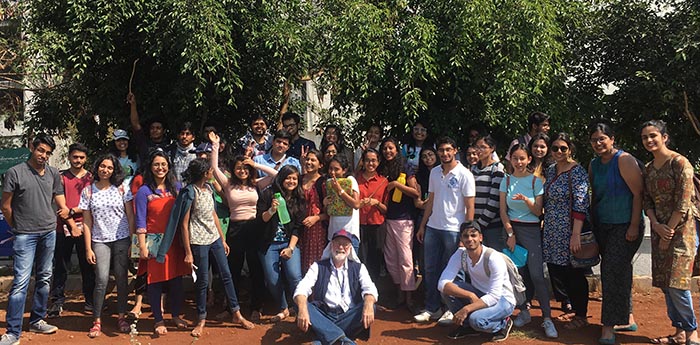
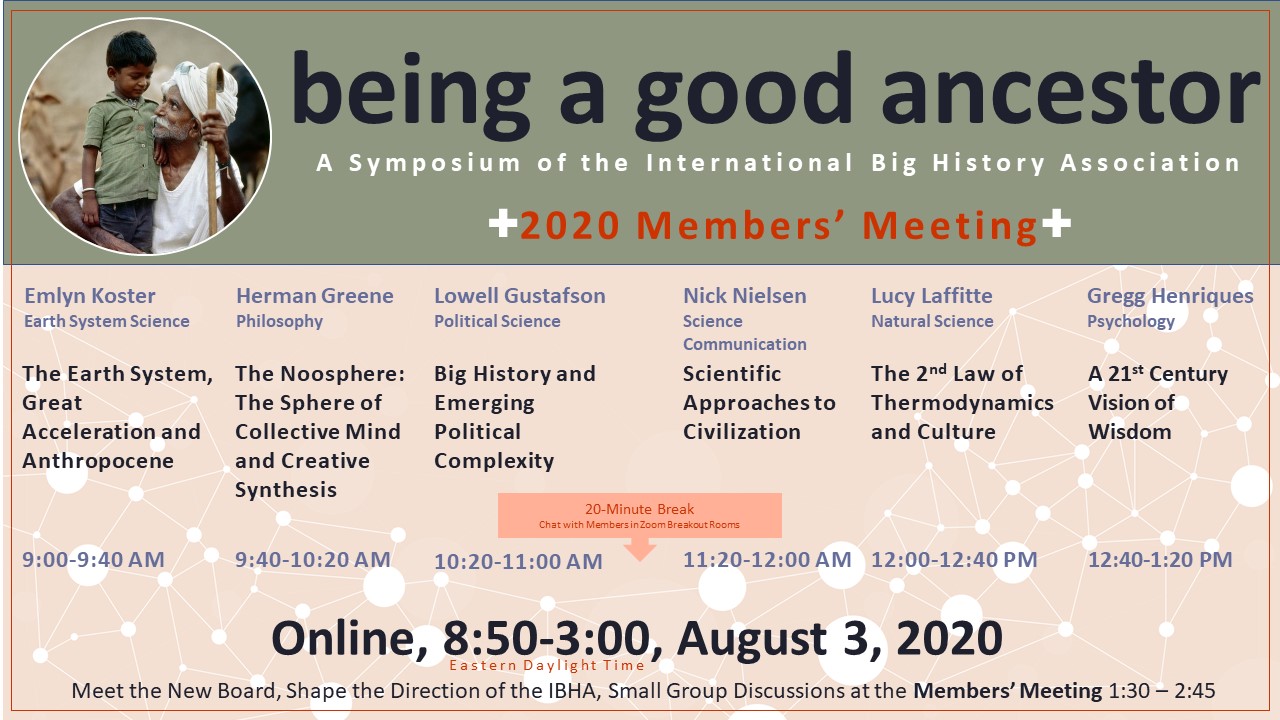
2020: Being a Good Ancestor (online) August 3
2019: Life in the Universe: Big History, SETI and the Future of Humankind, Milan Italy July 15-16
The Symposium is organized jointly by some members of the international SETI community and the International Big History Association (IBHA). It will take place in Milan (Milano, Italy) on July 15th – 16th, 2019, with an additional visit to the Republic of San Marino on July 17th and 18th, 2019. San Marino, known as the Most Serene Republic of San Marino, is an enclaved microstate surrounded by Italy, situated on the Italian Peninsula on the northeastern side of the Apennine Mountains. It was named a World Heritage Site by UNESCO in 2008.
Topics of Interest:
Big History Educational approaches for different ages and sector
Local Histories from a Universal point of view
Planetary sciences: the geologic conditions for life and civilizations
Astrobiology: life on other planets
SETI, both Radio and Optical
Sociological, Ecological and Economic Implications on Humankind after the First Contact with Aliens
2018: Big History, Big Future: A Cosmic Perspective, Villanova University, July 26-29
Schedule . Videos Emergent Universe Oratorio
2016: University of Amsterdam, 14-17 July
Program . Videos
The University of Amsterdam, where big history has been thought since 1994, proudly hosted the third IBHA conference, the first one held outside the USA.
The conference title “Building Big History: Research and Teaching” indicated that a major goal of the conference was to further develop the young field of big history, with concurrent presentations and roundtables on topics ranging from big history research agendas to innovative teaching practices.
Special events included keynotes by big history pioneers Fred Spier and Johan Goudsblom from the University of Amsterdam and paleobiologist Mark Williams from the University of Leicester. In addition, there was a presentation by the Big History Project and update sessions in which renowned scholars and scientists from the Netherlands lectured on the latest developments in their fields that are relevant for big history.
For those interested in the history of Amsterdam there was a guided walking tour. After the conference, attendees were invited to join a big history tour of Western Europe, in which a number of sites where important scientific discoveries were made and historically significant places were visited.
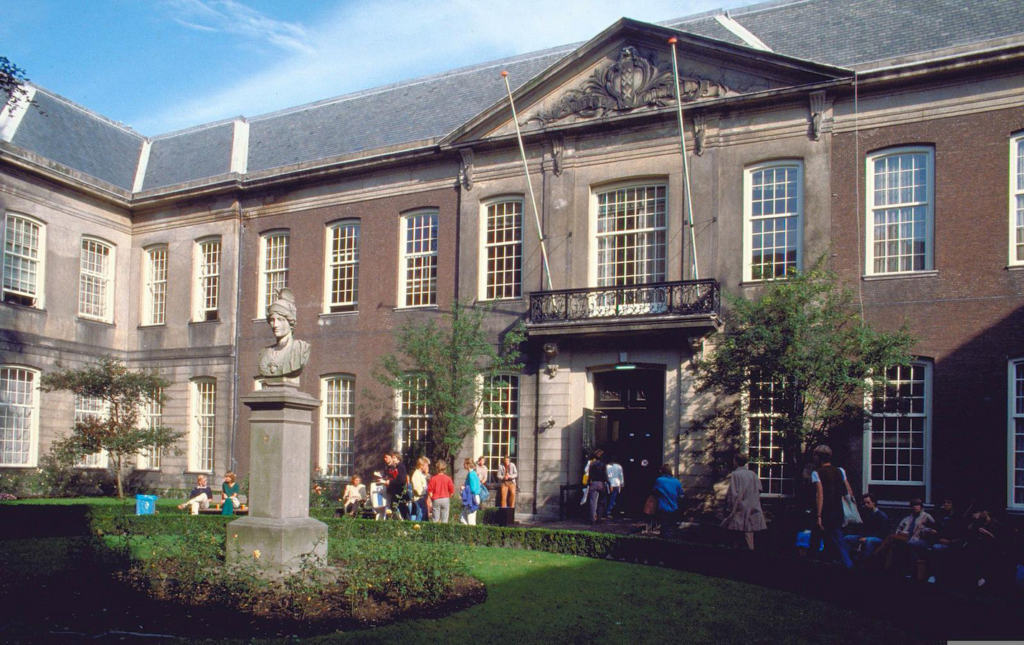
The main conference venue: the Oudemanhuispoort at the University of Amsterdam
2014: Dominican University of California, San Rafael, CA. August 6-10
Notes: Day1 | Day2 | Day3 Program
The second conference of the International Big History Association was held at Dominican University of California, a small private university situated twelve miles north of the Golden Gate Bridge, August 6 -10, 2014. Dominican is the first university to require Big History for all its first-year students.
The conference theme was “Teaching and Researching Big History: Big Picture, Big Questions” and the opening keynote “The Meaning of Big History” was delivered by David Christian. The first plenary session was led by Robert Connor, former president of the Teagle Foundation. The three conference days included concurrent sessions and roundtables, presentations by the Big History Project and the Microsoft Chronozoom Project, theatrical performances, and a screening of film The Journey of the Universe followed by a lively panel discussion between IBHA Board members and the filmmakers
The conference closed with Fred Spier’s keynote, “The Future of Humanity,” leaving everyone with a deeper and broader understanding of the past and excited about their role in shaping the future.
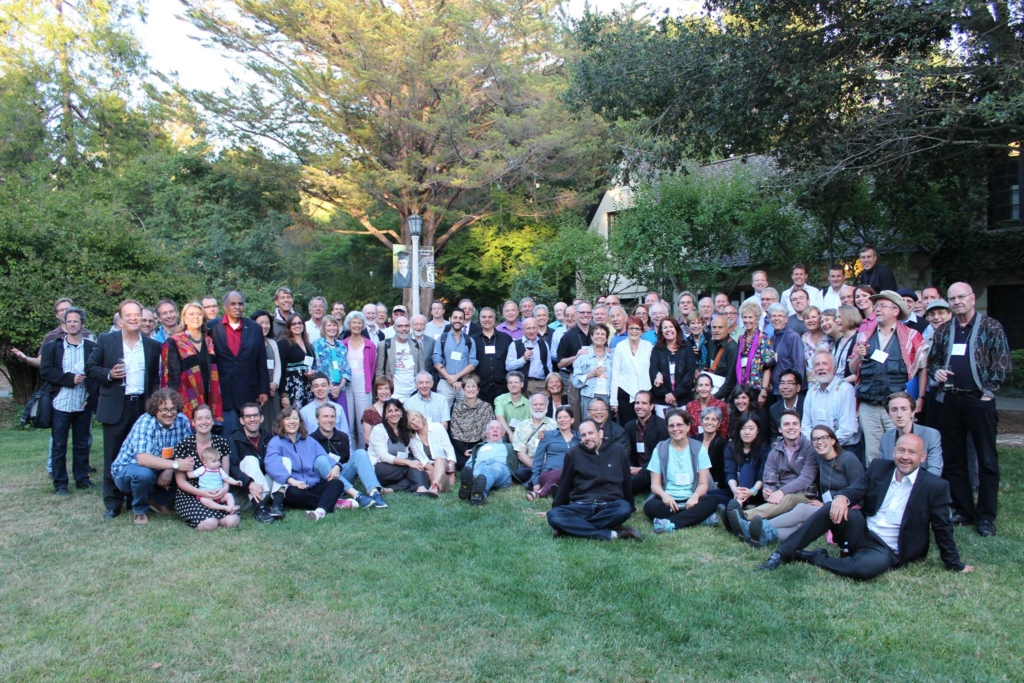
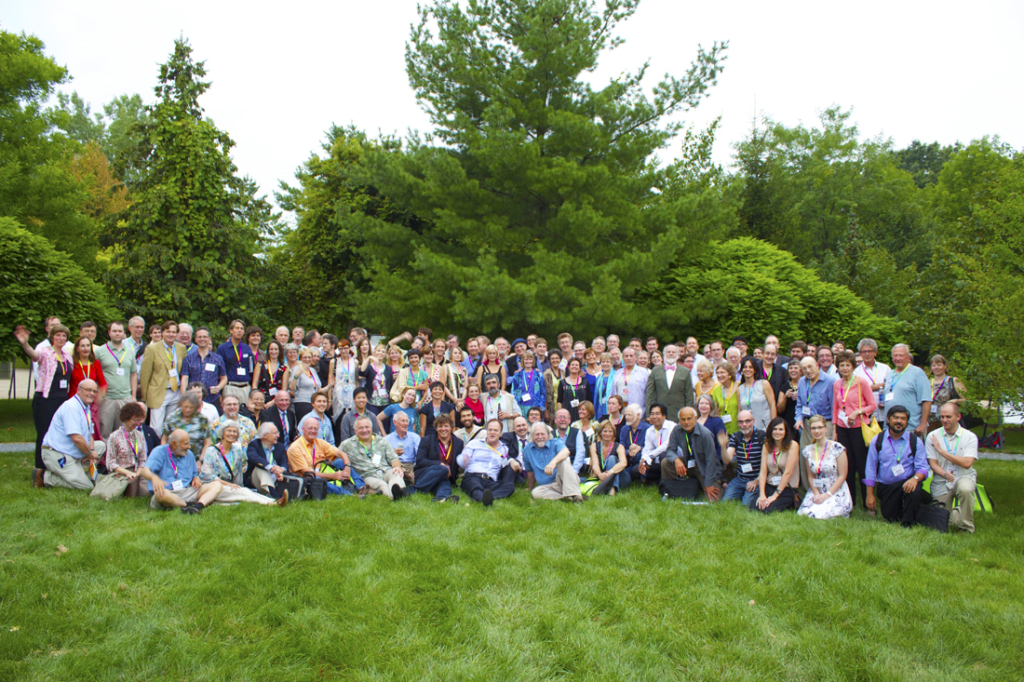
2012: First IBHA Conference: Grand Valley State University, Michigan. August 2-5
The inaugural conference of the International Big History Association was held at Grand Valley State University August 2-5, 2012. The conference theme was ‘Teaching and Researching Big History: Exploring a New Scholarly Field’.
The opening reception was held at the Grand Rapids Public Museum (and was followed by a special Big History program in the Planetarium); and keynote addresses were given at the Gerald R. Ford Museum, and at the main campus of GVSU in Allendale.
Conference delegates were able to choose between 40 different panels and roundtables, featuring some 130 different big history presentations. Both the Big History Project and the Microsoft Chronozoom Project were featured in plenary sessions; and Dr Walter Alvarez of the University of California Berkeley gave the principal keynote address titled, ‘Big History: A Bridge between Science and the Humanities’. The conference was a resounding success, and demonstrated the depth and breadth of big history research and teaching at all educational levels.